Before the Madisar Was a Saree, It Was a Way of Life
A story of tradition, everyday life, and the women who carried it from one generation to the next.
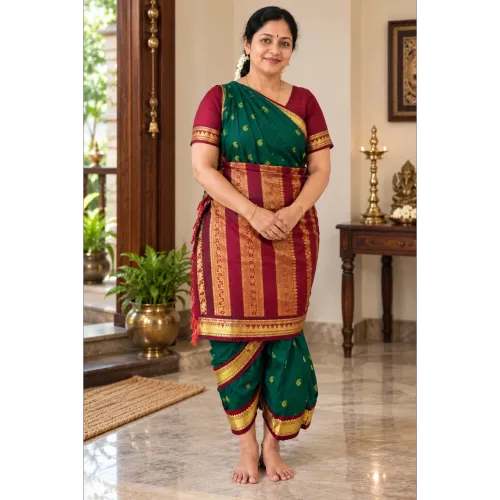
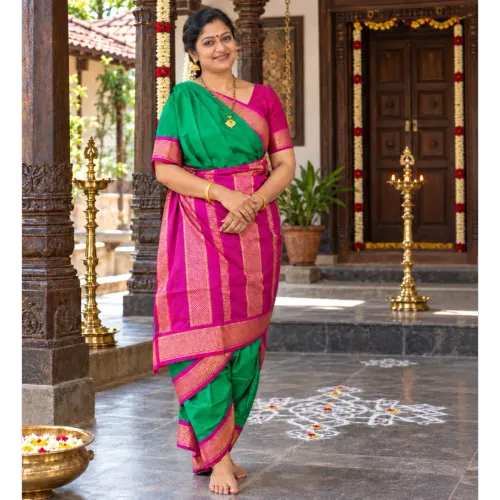
Today, when we hear the word Madisar, many of us immediately think of weddings, festivals, pujas, or an elderly mami gracefully moving through the house in a nine-yard saree.
For some, Madisar is something we see only on special occasions.
For others, it is a saree they remember from childhood—the saree their grandmother wore while cooking, drawing kolam, welcoming guests, going to the temple, or simply beginning another ordinary morning.
But there was a time when Madisar was not considered special-occasion clothing.
It was simply part of life.
And perhaps that is what makes Madisar so special today.
Madisar Was Never Just About the Saree
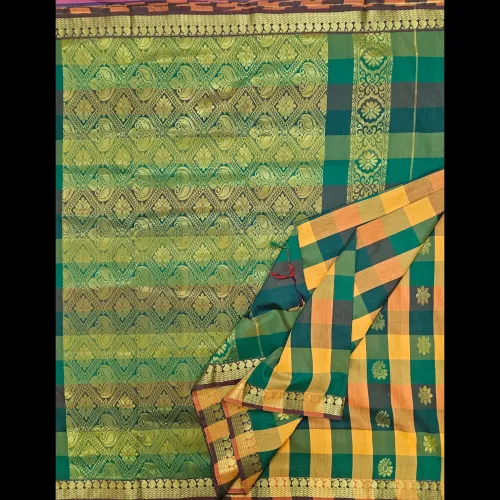
When we look at a Madisar today, it is easy to focus on the nine yards of fabric, the beautiful borders, the colours, the zari, or the way it is draped.
But the real story is much bigger.
Madisar was woven into the rhythm of everyday life.
A woman could wake up in the morning, complete her daily rituals, prepare food for the family, draw kolam, attend prayers, welcome relatives, visit the temple and participate in family occasions—all while wearing the same traditional style of drape.
She did not necessarily think of herself as “wearing traditional attire.”
She was simply getting dressed.
That difference matters.
Because when something becomes part of everyday life, it becomes more than clothing.
It becomes memory.
The Madisar We Remember
Ask someone about their grandmother wearing Madisar, and you may hear a surprisingly similar story.
Perhaps she remembers her grandmother sitting on the floor and adjusting the folds.
Perhaps she remembers the sound of bangles against the kitchen vessels.
Perhaps she remembers the Madisar being worn before a puja.
Perhaps she remembers being told:
“Don't touch the saree, I have just arranged it.”
Or perhaps she remembers something much simpler:
“My grandmother always wore Madisar.”
These small memories are important.
Because heritage is rarely preserved only in books.
It survives in ordinary moments.
A saree folded carefully in a cupboard.
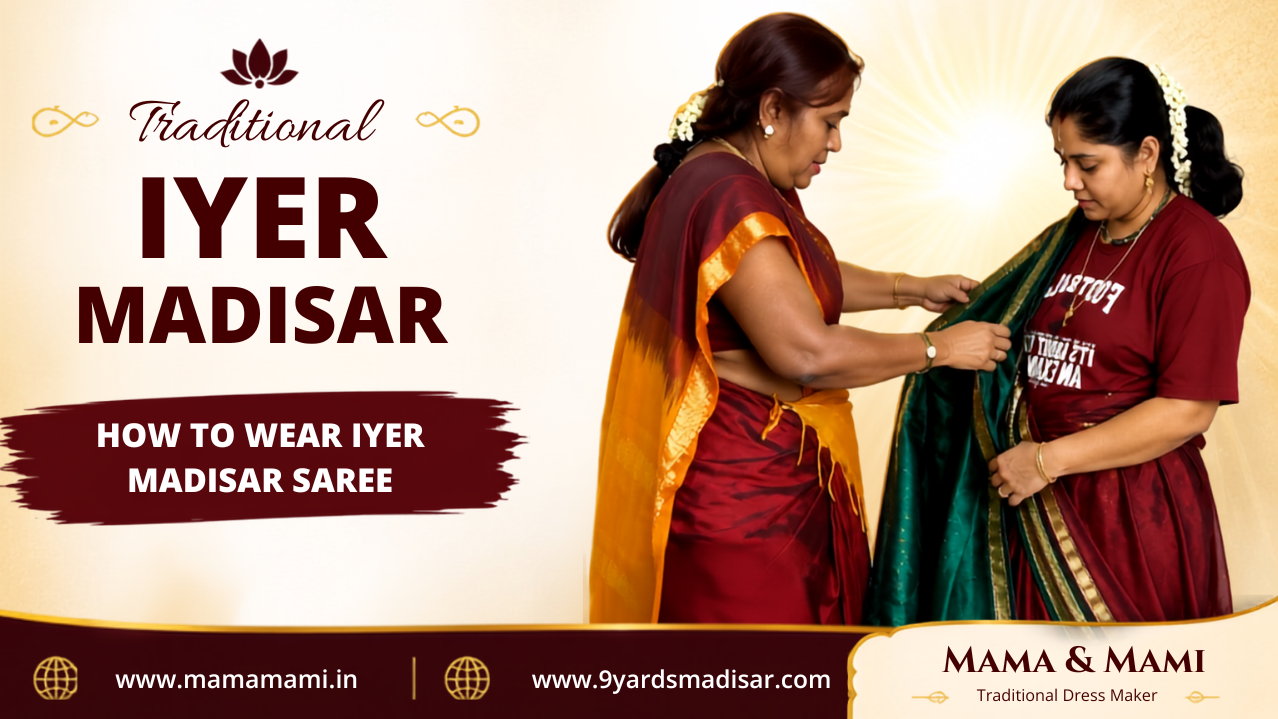
A mother teaching her daughter.
A grandmother correcting the pleats.
A daughter watching quietly from the doorway.
A nine-yard saree being taken out again and again for family occasions.
This is how traditions travel through generations.
Learning Madisar Was Once a Natural Part of Growing Up
For earlier generations, learning to wear Madisar was often not treated as a separate skill that needed to be scheduled.
Women grew up surrounded by it.
They saw their mothers wearing it.
They saw their aunts wearing it.
They watched grandmothers drape it.
They observed how the saree was folded, tucked and arranged.
Eventually, they learned.
There was no need for a formal class.
There was no need to search for a tutorial.
There was certainly no need to wonder:
“Who will teach me how to wear Madisar?”
The knowledge was already inside the family.
And this is one of the biggest differences between then and now.
Then Life Changed
Families became smaller.
Children moved to different cities and countries.
Women entered new professions.
Homes changed.
Daily routines changed.
The joint-family environment became less common.
And the occasions on which traditional clothing was worn also changed.
Madisar slowly moved from the everyday wardrobe to the special-occasion wardrobe.
Weddings.
Pujas.
Festivals.
Religious ceremonies.
Family celebrations.
For many women, this was the beginning of a gradual change.
The Madisar was still loved.
The tradition was still respected.
But fewer women had the opportunity to learn it naturally.
And when something is no longer practiced regularly, even a beautiful tradition can begin to feel difficult.
The Fear of the Nine Yards
For someone who has never worn Madisar, nine yards can sound intimidating.
There is more fabric.
There are more folds.
The drape is different from the conventional saree.
The way the saree passes around the body is distinctive.
And because Madisar is deeply associated with tradition, a beginner may feel that she has to get everything exactly right.
That can create hesitation.
“What if I don't know how to drape it?”
“What if it comes loose?”
“What if I cannot walk comfortably?”
“What if I make a mistake?”
These are very real concerns for a first-time wearer.
But there is something important to remember:
Every woman who wears Madisar confidently today was once a beginner.
The difference is that earlier generations often had someone beside them to teach, correct and encourage them.
The Woman Behind the Madisar
Perhaps the most beautiful part of the Madisar story is not the fabric at all.
It is the woman wearing it.
The Madisar accompanied women through different stages of life.
It could be part of family rituals, celebrations, religious observances and important milestones.
It represented a connection to the customs and values of the family.
And for many women, it was also simply comfortable, familiar clothing that they knew how to move in.
This is something we sometimes forget when we look at traditional clothing from the present day.
We see the finished appearance.
Our grandmothers experienced the everyday reality.
They knew how to sit in it.
Walk in it.
Work in it.
Cook in it.
Pray in it.
Welcome guests in it.
And live their ordinary lives in it.
When a Saree Carries Memory
Imagine opening an old cupboard.
Inside is a carefully folded saree.
The fabric may have become softer with age.
The zari may not shine quite as brightly as it once did.
There may be small signs of years of use.
But the moment you see it, you remember someone.
Your grandmother.
Your mother.
An aunt.
A wedding.
A festival.
A particular house.
A particular voice.
A particular time in your life.
That is the power of traditional clothing.
The fabric remembers.
And Madisar, perhaps more than many other garments, carries this emotional connection because its wearing itself is part of a larger family tradition.
Why Are We Talking About This Today?
Because Madisar should not become something that exists only in photographs of our grandmothers.
Tradition does not have to remain frozen in the past.
It can continue.
It can be learned again.
It can be worn by younger women.
It can appear at weddings and festivals.
It can be introduced to daughters and granddaughters who grew up far away from their ancestral homes.
And it can become familiar again.
The question is not whether today's woman lives the same life as her grandmother.
She doesn't.
And she doesn't need to.
The better question is:
How can we carry the tradition forward while living the life we have today?
Madisar Is Still a Living Tradition
There is something deeply reassuring about seeing a young woman learn Madisar today.
She may live in a city.
She may work in an office.
She may live outside India.
She may have grown up without seeing Madisar every day.
She may have learned the traditional drape only because she wanted to wear it for her wedding or a family ceremony.
But the moment she puts it on, something connects.
Not because she has suddenly become her grandmother.
But because she is carrying forward something her grandmother once carried.
That is how traditions survive.
Not by remaining exactly where they were.
But by finding their place in the next generation.
From Grandmother to Granddaughter
Perhaps this is the real journey of Madisar.
It begins with one woman.
She learns from another woman.
Years later, she teaches someone else.
And somewhere along the way, the saree becomes more than clothing.
It becomes a story.
A story about family.
A story about women.
A story about faith and celebration.
A story about changing lifestyles.
And above all, a story about continuity.
The nine yards are only the beginning.
The memories are much longer.
Madisar Today
Today, women may choose between traditional, hand-draped Madisar and convenient ready-to-wear options.
Some may already know how to drape it.
Some may be learning for the first time.
Some may wear it only once a year.
Others may wear it whenever they have an opportunity.
There is no single way to reconnect with tradition.
What matters is that the connection remains.
Because the purpose is not to recreate our grandmothers' lives.
The purpose is to make sure their traditions still have a place in ours.
A Tradition Worth Passing On
One day, perhaps a daughter will open her mother's cupboard and find a Madisar.
She may ask:
“Amma, who taught you to wear this?”
And her mother may tell her about her grandmother.
That conversation is more important than we realize.
Because the moment we tell the story, we pass on more than information.
We pass on memory.
And when the daughter eventually wears that Madisar herself, the story continues.
The Madisar Lives On
Madisar may have moved from everyday wear to special occasions for many families.
But it has not disappeared.
It is still being worn.
Still being learned.
Still being discussed.
Still being remembered.
And still creating new memories.
Because tradition is not something that belongs only to the past.
Tradition is something we choose to carry into the future.
And perhaps that is the most beautiful thing about Madisar.
**Before it was a saree, it was a way of life.
Today, it can become a way of remembering.
Tomorrow, it can become a tradition our daughters carry forward.**
A Question for You
Who was the first woman you remember wearing Madisar?
Was it your grandmother?
Your mother?
Your aunt?
Or perhaps it was you—the first woman in your family to learn it in a new generation.
Tell us her story.
Because traditions survive not only when they are worn, but when their stories are shared.