Ready-to-Wear Madisar: Keeping Tradition Beautiful and Effortless
There is something unmistakably graceful about a Madisar.
For generations, the nine-yard saree has been part of important moments in Tamil Brahmin homes—from weddings and religious ceremonies to festivals and family functions. For many women, seeing a mother or grandmother dressed in Madisar immediately brings back memories of celebrations at home.
But there is one question we hear increasingly from younger women:
“I love wearing Madisar, but can I manage the draping by myself?”
That is exactly where the ready-to-wear Madisar becomes useful.
Tradition Hasn't Changed. Our Lives Have.
A traditional Madisar drape is beautiful, but learning to wear nine yards correctly takes practice.
Earlier, women often learned the drape by watching their mothers, grandmothers and other women in the family. Today, families may live in different cities—or even different countries. A daughter preparing for a function in Bengaluru, London or California may not always have an experienced family member standing beside her to help with every pleat and tuck.
That doesn't mean she wants to give up the tradition.
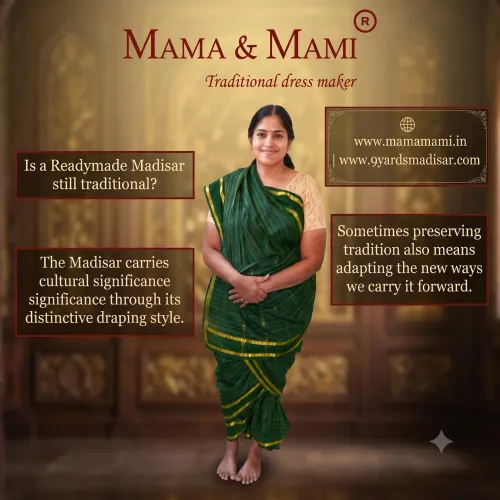
A thoughtfully prepared ready-to-wear Madisar can make it easier to continue it.
Why Younger Women Are Choosing Ready-to-Wear Madisar
Convenience is certainly one reason, but it isn't the only one.
For an early-morning muhurtham or pooja, getting dressed can already involve jewellery, flowers, makeup and numerous preparations around the house. Spending additional time trying to perfect an unfamiliar nine-yard drape can make the morning unnecessarily stressful.
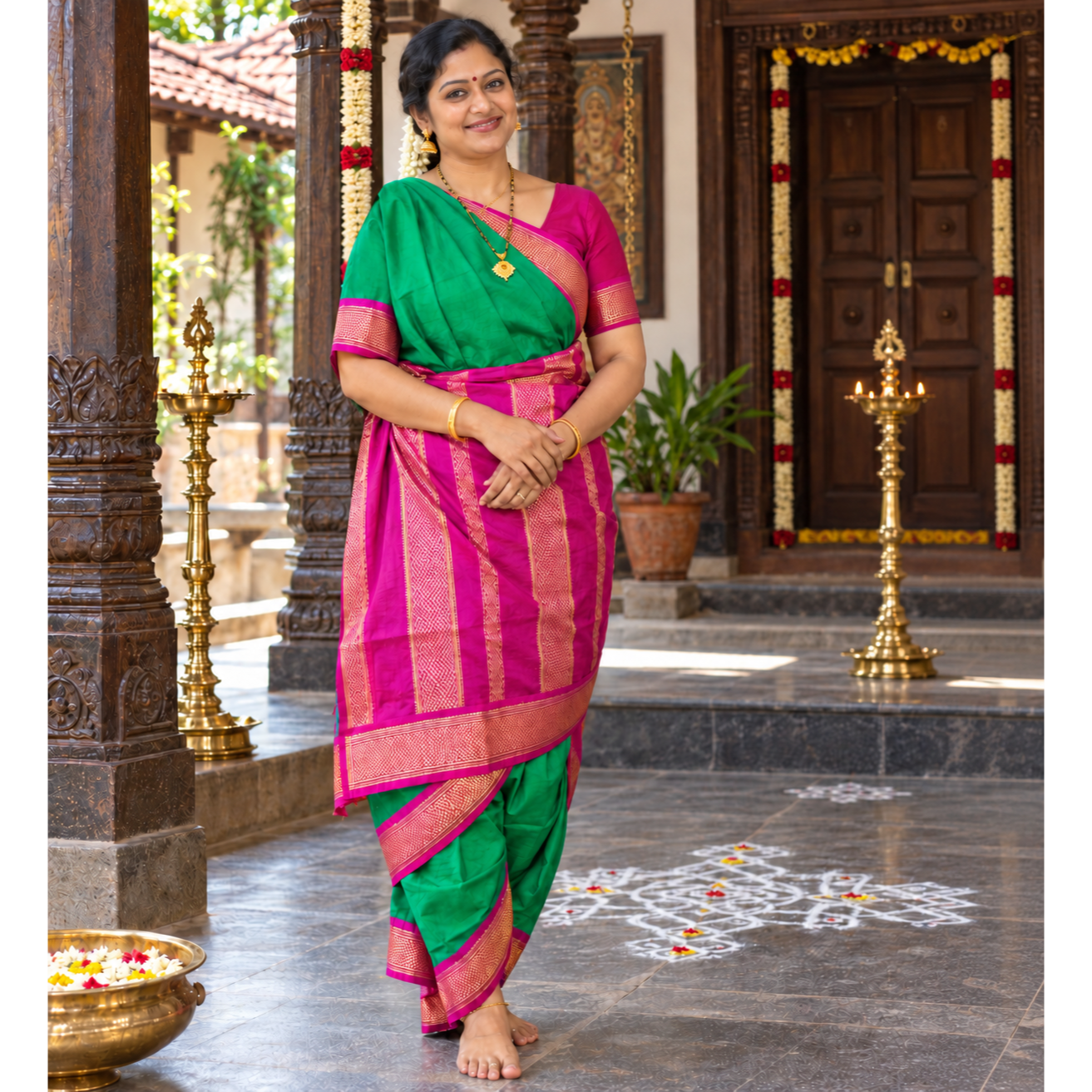
A ready-to-wear Madisar simplifies that process while retaining the distinctive appearance of the traditional attire.
It can be especially helpful for women wearing Madisar for the first time, daughters living away from their families, busy mothers getting children ready for a function, and women who love the traditional look but aren't confident about draping nine yards independently.
Iyer and Iyengar Madisar Are Not the Same
One detail that should never be overlooked is the style of draping.
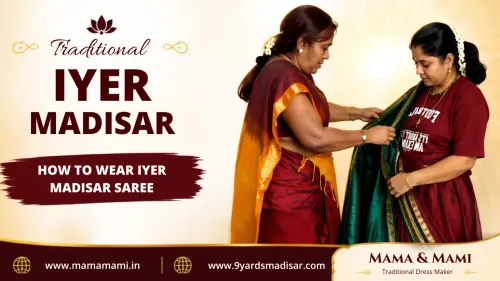
Iyer and Iyengar Madisar traditions have differences in the way the saree is arranged and worn. When choosing a stitched or ready-to-wear Madisar, it is therefore important to select the appropriate style rather than treating every nine-yard drape as identical.
Tradition lies in these details.
Choosing the Fabric
The occasion should help determine the fabric.
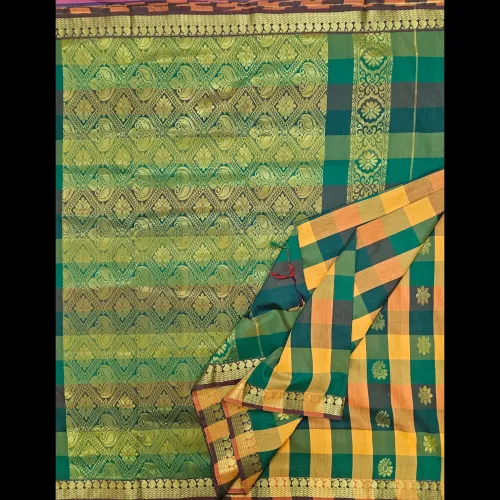
For weddings and important ceremonies, the richness of silk creates a beautiful traditional appearance, particularly when paired with a contrasting pallu and an elaborate border.
For occasions where comfort and ease of movement are particularly important, cotton and lighter fabrics can be wonderful choices. A well-selected cotton Madisar has a character of its own—traditional, elegant and comfortable.
Semi-silk options can provide another useful balance for women who want a festive appearance without the weight of heavier silk.
Don't Underestimate Colour
The beauty of a Madisar often comes alive through contrast.
Think of combinations such as mango yellow with maroon, traditional green with maroon, purple with bottle green, deep red with green, or blue contrasted with a rich purple pallu.
The body colour may catch your attention first, but the border and pallu determine much of the saree's final character when it is worn.
This is especially important when shopping online. Don't judge a Madisar only by a folded photograph. Imagine where each colour will appear after the saree is actually draped.
Your First Madisar Doesn't Need to Be Difficult
Many women postpone wearing Madisar because they worry they won't know how to drape it correctly.
That would be an unfortunate reason for a beautiful tradition to disappear.
The purpose of ready-to-wear Madisar isn't to replace tradition. At its best, it helps make tradition practical for the lives women lead today.
A daughter who can dress herself confidently for a family pooja is more likely to wear Madisar again.
A granddaughter who discovers that traditional attire can be comfortable and beautiful may eventually teach the same tradition to another generation.
And that is how traditions continue—not simply because we preserve them, but because people still enjoy practising them.
Choosing Your Madisar
Before buying, think about the occasion, preferred fabric, Iyer or Iyengar draping style, body colour, border and pallu combination, and how long you expect to wear it during the function.
Most importantly, choose something that makes you look forward to wearing Madisar.
Because nine yards shouldn't feel like an obligation.
It should feel like coming home to a tradition.
Explore Madisar sarees, traditional styles and ready-to-wear collections:
Mama Mami — www.mamamami.in
9 Yards Madisar — www.9yardsmadisar.com