When Did Madisar Become a Memory? The Untold Story of a Tradition That Almost Disappeared
For many Tamil Brahmin families, the Madisar saree is more than a garment. It is a symbol of heritage, family values, and a way of life that has been passed down through generations.
Yet, there is a question that many younger women have quietly wondered:
If Madisar was once worn every day, why do we see it only during weddings, festivals, and special ceremonies today?
The answer is not found in a single event. It is a story that unfolded slowly across decades, changing the way generations viewed tradition, clothing, and daily life.
A Time When Every Married Woman Wore Madisar in IYER and IYENGAR community.
There was a time when Madisar was not reserved for special occasions.
From the early morning hours to the end of the day, married women wore Madisar as part of their normal routine. Whether they were preparing meals, visiting neighbours, attending temple functions, or managing their households, Madisar was simply a part of everyday life.
Walk through an agraharam several decades ago and you would see rows of Mamis wearing Madisar while drawing kolams, exchanging greetings, and carrying out daily activities.
Nobody described it as traditional attire.
Nobody considered it ceremonial wear.
It was simply the attire of a married woman.
Madisar Was More Than Clothing
For earlier generations, Madisar represented responsibility, family values, and cultural identity.
A newly married woman entering her husband's home would learn not only family customs and rituals but also the significance of wearing Madisar.
It connected generations.
A grandmother, mother, and daughter-in-law often shared the same traditions, creating a visible thread that tied families together.
Madisar was woven into daily life so naturally that very few people imagined a future where it would become rare.
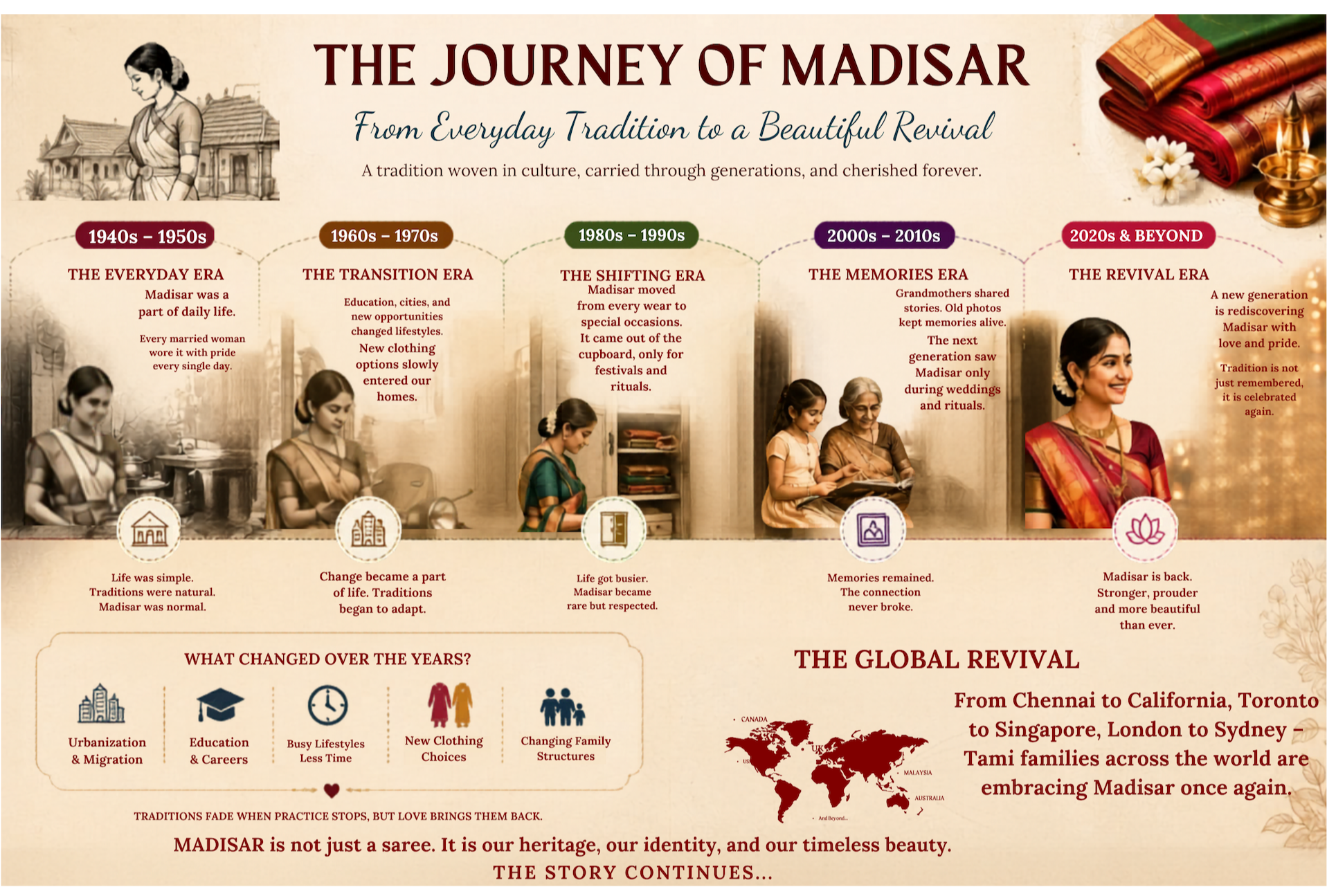
The Changing World of the 1960s, 70s and 80s
As India evolved, lifestyles began changing.
Education expanded. Cities grew larger. Employment opportunities increased. Families moved from villages and agraharams to towns and metropolitan cities.
With these changes came new routines and new priorities. Women began balancing family responsibilities with education, travel, and professional commitments. The world was becoming faster.
New Clothing Choices Entered Tamil Brahmin Homes
Alongside these social changes came new clothing options. Regular sarees became increasingly common for daily wear. Later, salwar suits and other practical garments gained popularity. For many women, these options felt easier to manage in changing environments. The shift did not happen suddenly. It happened gradually over many years.
One generation wore Madisar daily. The next generation wore it occasionally. The generation after that often wore it only during important ceremonies.
Madisar Slowly Became Occasion Wear
Many families did not consciously decide to stop wearing Madisar. Life simply changed around them.
As daily routines evolved, Madisar slowly moved from being everyday attire to being associated with:
Weddings
Grahapravesam ceremonies
Sumangali Prarthanai
Upanayanam functions
Religious festivals
Family rituals
What was once ordinary became special. What was once daily became occasional.
Why Madisar Never Completely Disappeared
Despite these changes, Madisar never truly vanished.
Unlike many traditions that fade away entirely, Madisar remained deeply respected within Tamil Brahmin families. Even when it was no longer worn every day, it continued to hold emotional significance.
Grandmothers Became the Keepers of Tradition
For many families, grandmothers became living reminders of a different era. Their wedding photographs, stories, and personal experiences preserved memories of a time when Madisar was a natural part of daily life. Many children grew up listening to stories about family functions, temple visits, and community gatherings where Madisar was everywhere. These stories quietly kept the tradition alive.
Every Family Has a Madisar Story
Some remember seeing their grandmother wear Madisar every day. Others remember carefully folded silk Madisars stored away for special occasions. Some recall wedding albums where every married woman was dressed in traditional Madisar. Even when the practice became less common, the memories remained.
And memories have a way of waiting for the right moment to return.
The Surprising Return of Madisar in the 21st Century
Something remarkable has happened over the past two decades. A generation that did not grow up wearing Madisar has begun embracing it once again. Young women who spent their childhood seeing Madisar only during ceremonies are now actively seeking it for their own weddings and family functions.
Why Are Young Women Choosing Madisar Again?
Many women today have successful careers and modern lifestyles. They work in technology, finance, healthcare, education, and countless other professions. Yet they are also searching for meaningful ways to stay connected to their roots. For many, wearing Madisar is not about going backwards. It is about carrying tradition forward. It is about honouring parents, grandparents, and family heritage while living in a modern world.
The Overseas Tamil Brahmin Community Is Leading the Revival
An interesting part of this revival is happening in INDIA and also far beyond India. Tamil Brahmin families living in:
United States
Canada
United Kingdom
Australia
United Arab Emirates
Singapore
Malaysia
are showing renewed interest in Madisar traditions.
Many younger women who grew up abroad want to experience the traditions they heard about from parents and grandparents. For them, Madisar is not merely a saree. It is a connection to family history.
A New Generation Is Writing the Next Chapter
Perhaps the most surprising part of the Madisar story is that its revival is being driven by people who were never required to wear it. Young women born after 2000 are choosing Madisar because they want to.
Not because someone insists. Not because society expects it. But because they feel a genuine connection to what it represents.
Tradition and Modern Life Can Coexist
Today's generation is proving that tradition and modernity do not have to compete. A woman can work in a corporate office, live abroad, travel the world, and still proudly wear Madisar during important moments in her life. The values of the past and the realities of the present can exist together.
The Revival Is Just Beginning
For many years, people believed Madisar was gradually disappearing. Today, the story looks very different.
Across India and around the world, a new generation is rediscovering its beauty, meaning, and cultural significance. Perhaps Madisar never disappeared at all. Perhaps it was simply waiting for a new generation to embrace it once again. And that generation has already arrived.