My Grandmother's Madisar Had No Stitching, Yet It Never Came Loose
I still remember watching my grandmother wear her Madisar every morning.
There were no safety pins. No stitched pleats. No readymade Madisar. No YouTube tutorials. No one standing beside her to help.
Just a nine-yard saree, years of experience, and a confidence that came from wearing it every single day.
As children, we would watch in amazement. Within a few minutes, the long saree would transform into a perfectly draped Madisar. Every fold was neat. Every pleat sat in place. By the time she finished, she was ready to begin her day.
And what a day it was. Drawing kolam before sunrise. Preparing meals for the entire family. Performing daily pooja.
Welcoming relatives and guests. Attending temple visits and family functions. Yet through all this activity, her Madisar never seemed to move. Not once did we hear her complain that it was uncomfortable. Not once did we see her adjusting it every few minutes. And certainly not once did we see it come loose.
One day, curiosity got the better of me.
"Paati, how does your Madisar stay in place all day without stitching?" She smiled and continued folding the clothes in her hand.
"The Madisar stays where it should when you wear it properly," she said. At the time, I thought the answer was too simple. Years later, I realized how much wisdom was hidden in those few words.
A Different Way of Life
When we look at old photographs of our grandparents' generation, one thing often stands out.
Many of the mamis and mamas appeared naturally fit and active. Their lifestyle was very different from ours. They walked more. They sat on the floor. They performed household chores themselves. Their daily routines involved constant movement.
Food was usually prepared fresh at home. Meals followed regular timings. Traditional eating habits emphasized balance, moderation, and simplicity. There were no fitness apps, calorie counters, or diet plans. Yet their everyday life itself kept them active. This lifestyle played a role in how comfortably they carried traditional attire like the Madisar.
The Little Secret Behind the Perfect Fit
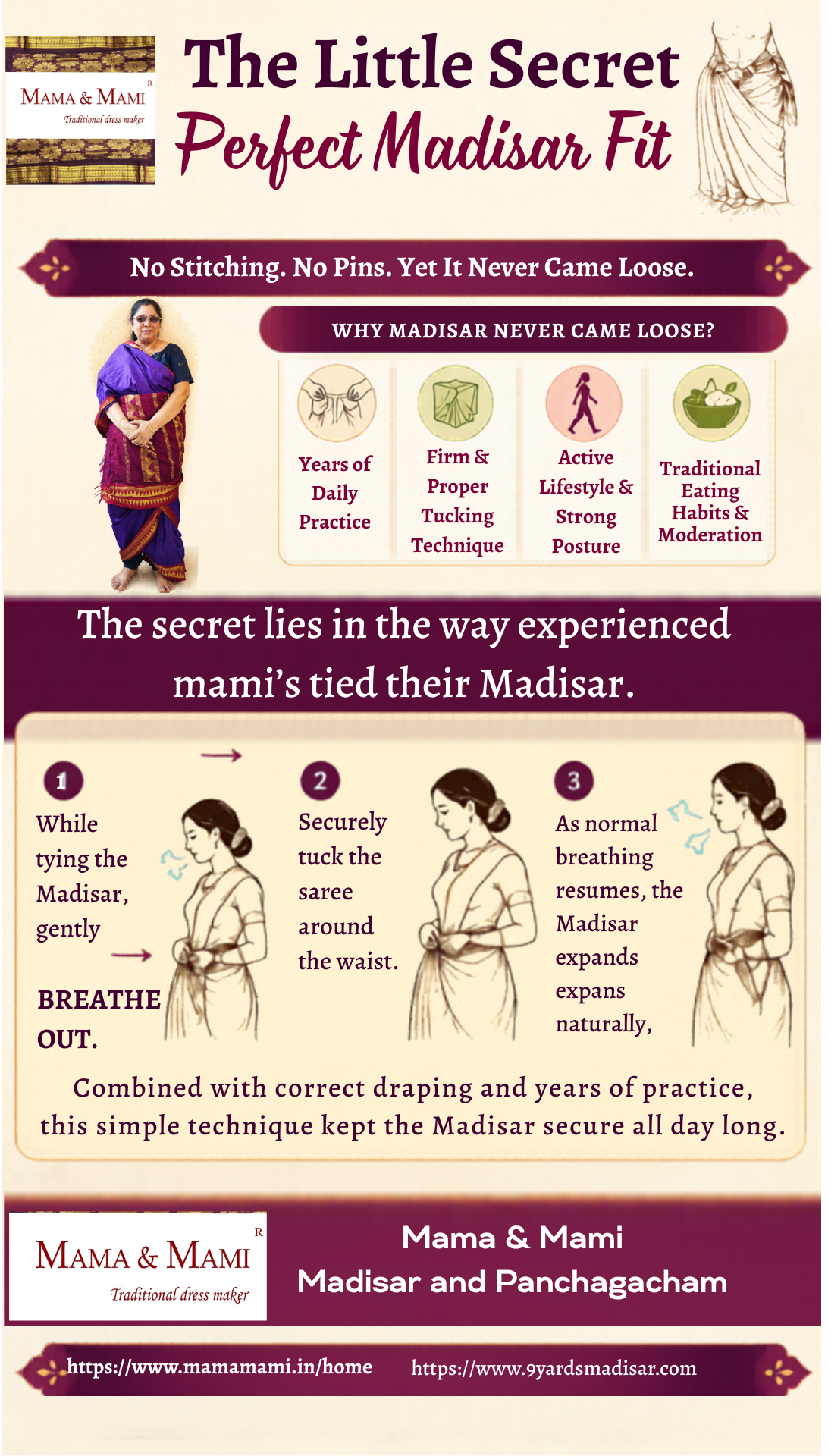
There was also a practical technique that many experienced Madisar wearers knew.
- When tying the Madisar around the waist, they would gently breathe out before securing the saree.
- As the saree was tucked firmly into place, the waist became slightly smaller.
- Then, when normal breathing resumed, the stomach naturally expanded a little, helping create a secure hold around the waist.
- Knots are also important, but during knots, stomach should shrink and after knot, stomach comes out.
- This simple technique helped the Madisar remain comfortably in place for long hours.
- It was knowledge passed from one generation to the next.
No instruction manuals. No online tutorials. Just experience and practice. That is one of the reasons why an unstitched Madisar could stay secure throughout an entire day of activity.
More Than Just a Saree
For our grandmothers, the Madisar was not special-occasion attire.
- It was daily wear.
- They cooked in it.
- They prayed in it.
- They travelled in it.
- They raised families in it.
- They celebrated festivals in it.
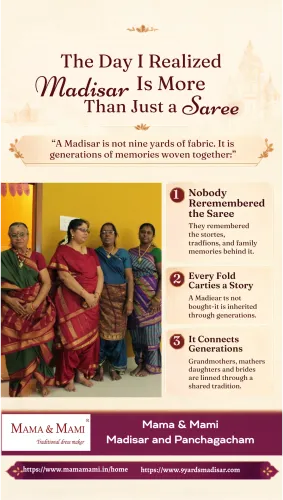
The Madisar was woven into their everyday life. Every fold carried tradition. Every drape reflected discipline. Every day spent wearing it strengthened a connection to generations before them.
What Has Changed Today?
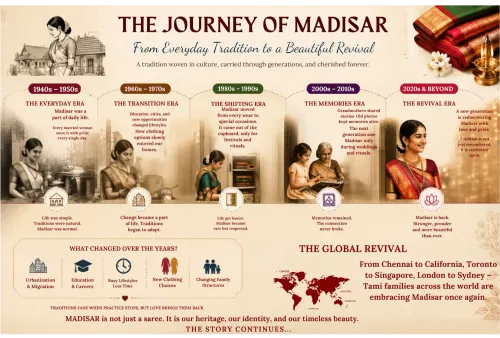
Life today is very different. Many women live away from their hometowns and extended families. Traditional draping techniques are no longer learned naturally while growing up. Special occasions are often busy, and finding someone to help drape a Madisar can be difficult. Yet something beautiful is happening. Many young women are rediscovering the Madisar. Brides are choosing to wear it for weddings.
Families continue to wear it for Grahapravesam, Sumangali Prarthanai, Upanayanam, Navarathri, and other important occasions. Whether it is worn in the traditional unstitched style or as a readymade stitched Madisar, the emotion behind it remains the same. It is a connection to our roots.
A Lesson Beyond the Saree
Today, when I think about my grandmother's Madisar, I realize it was never only about the saree.
- It was about patience.
- It was about discipline.
- It was about learning from experience.
- It was about preserving traditions through daily practice.
- Her Madisar had no stitching.
- Yet it never came loose.
Perhaps it was not only because of the way she tied it. Perhaps it was because it was held together by a lifetime of tradition, wisdom, and confidence.
Share Your Memory
Do you remember watching your mother, grandmother, or another family member wear a traditional Madisar? Was there a special tip, technique, or piece of advice they shared with you? We would love to hear your memories and stories. Because traditions survive when stories are shared.