The Day I Realized Madisar Is More Than Just a Saree
For many years, I thought the Madisar was simply a traditional saree.
Something worn during weddings.
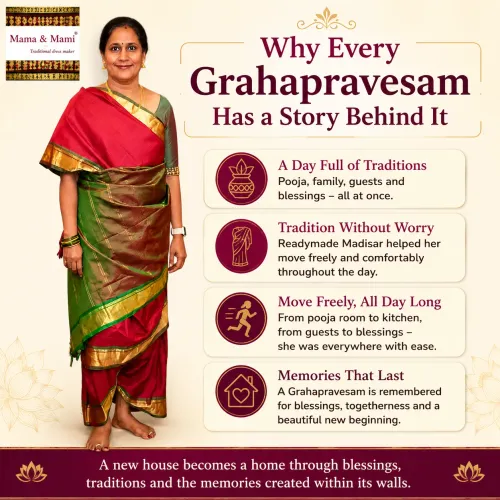
Something worn during Grahapravesam.
Something worn during Navarathri and family functions.
Beautiful? Yes.
Traditional? Certainly.
But one day, I realized it was much more than that.
A Wedding Morning I Still Remember
A few years ago, I attended a family wedding.
Like every traditional wedding, the house was full of activity.
The bride was getting ready.
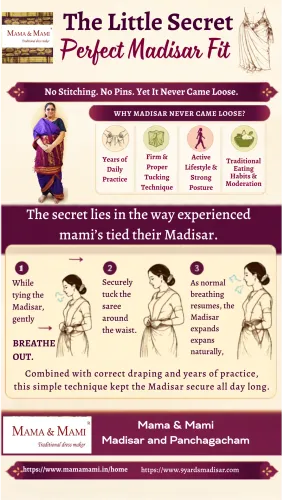
A group of experienced mamis had gathered to help her wear the Madisar.
As I stood nearby, I noticed something interesting.
Nobody was talking about:
The silk quality
The zari border
The colour combination
The price of the saree
Instead, everyone was talking about:
The bride's grandmother
The family's traditions
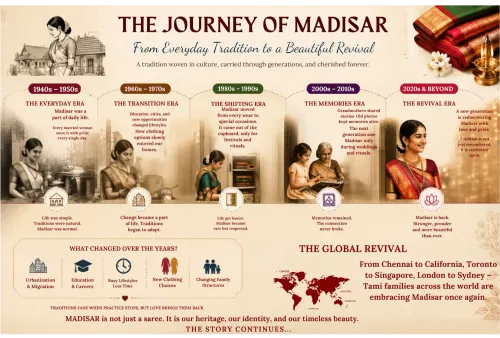
How Madisar was worn in earlier generations
Memories of previous weddings
That was the moment something clicked.
The Madisar was present in the conversation.
But the conversation was never really about the Madisar.
It was about family.
It was about memories.
It was about belonging.
Every Fold Carries a Story
As the bride stood there, surrounded by her family, I realized something our elders always understood.
A Madisar is not just worn.
It is inherited.
Along with the saree come stories such as:
How Paati wore it every day
How Amma wore it on her wedding day
How traditions were followed in the family
How values were passed from one generation to the next
Every fold carries a memory.
Every drape carries a blessing.
Every generation adds a new chapter to the story.
What Our Grandmothers Knew
Our grandmothers rarely spoke about preserving culture.
They simply lived it.
They preserved traditions by:
Wearing Madisar during important occasions
Teaching daughters and granddaughters
Participating in family rituals
Leading by example
They never called it "heritage preservation."
For them, it was simply a way of life.
Why Madisar Still Matters Today
Today, life looks very different.
Many families live across:
India
USA
UK
UAE
Canada
Australia
Children often grow up far away from their ancestral homes.
Yet whenever there is:
A wedding
Grahapravesam
Sumangali Prarthanai
Upanayanam
Navarathri
The Madisar returns.
Why?
Because it reminds us:
Where we come from
Who came before us
What traditions shaped our families
What we want to pass on to the next generation
What Paati Taught Us Today
A Madisar is not special because of:
The silk
The border
The design
A Madisar is special because of:
The memories attached to it
The traditions it represents
The generations it connects
That wedding day taught me something I will never forget.
The Madisar is more than just a saree.
It is family history worn with pride.
Three Things I Realized That Day
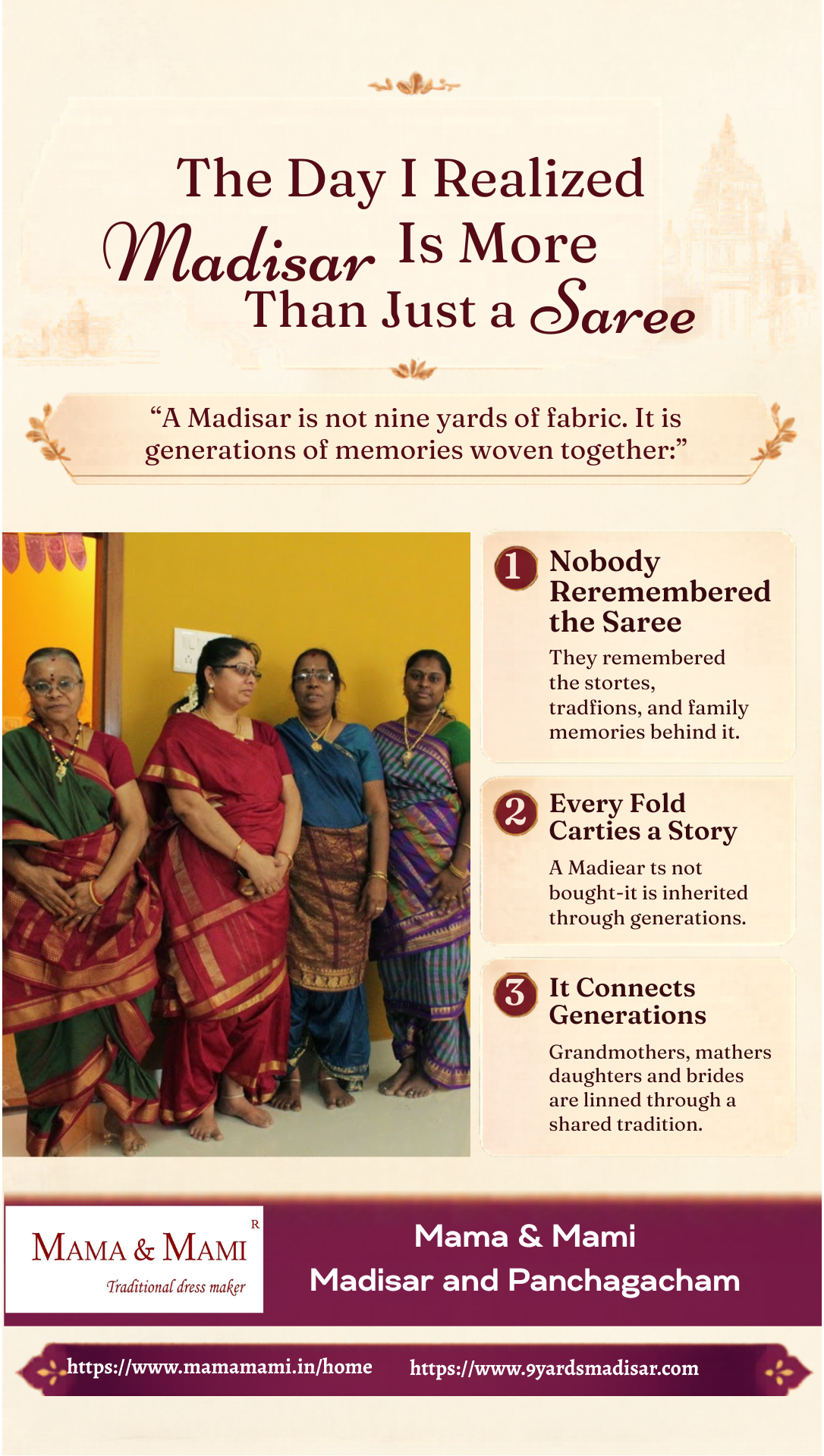
1. Nobody Remembered the Saree
People remembered the stories behind it.
2. Every Generation Adds a New Memory
The Madisar becomes richer with every wedding and ceremony.
3. Traditions Become Visible Through Madisar
It is one of the most beautiful ways our heritage continues to live.
Share Your Memory
- When did you first realize that the Madisar was more than just a saree?
- Was it during a wedding?
- A festival?
- A Grahapravesam?
- Or while watching your mother or grandmother?
- Share your story with us.
- Because traditions survive when stories are shared.